The emerging algal bio-economy represents a transformative opportunity for regional industries to pivot from traditional resource consumption to sustainable regeneration. As applied phycologist David Moheimani outlines, algae offers a unique dual capability: it acts as a highly efficient carbon sink—capturing 1.8kg of CO2 per kilogram of biomass—while simultaneously serving as a scalable source of protein, biofuel, and high-value biochemicals. The research undertaken at Murdoch University highlights the shift from mere theoretical application to commercial viability, particularly through advanced photobioreactor technologies that solve historical issues regarding thermal management in closed systems.
Central to this innovation is the 'waste-to-profit' model, which transforms liabilities into assets. Regional businesses, particularly those in agriculture (piggeries, abattoirs, dairy) and small municipal councils, can utilise algae to treat wastewater. Unlike traditional treatment which is costly and struggles with inorganic nitrogen and phosphates, algae thrives on these nutrients. The result is a circular economy loop producing clean water, biomethane for energy, fertilizers, animal feed, and bioplastics. This approach not only mitigates environmental compliance costs but generates new, saleable revenue streams from waste by-products.
Furthermore, the geographic attributes of Western Australia and similar regional zones—specifically access to seawater, abundant sunlight, and vast tracts of non-arable arid land—create a competitive advantage for saline algae cultivation. This method allows for the production of high-value pigments and Omega-3 oils without competing for freshwater or fertile agricultural land. With the global demand for sustainable protein sources and renewable energy rising, regional Australia is uniquely positioned to become a premier export hub for algal-derived food and fuel, supported by spin-off enterprises like Algae Harvest capable of driving these technologies to commercialisation.
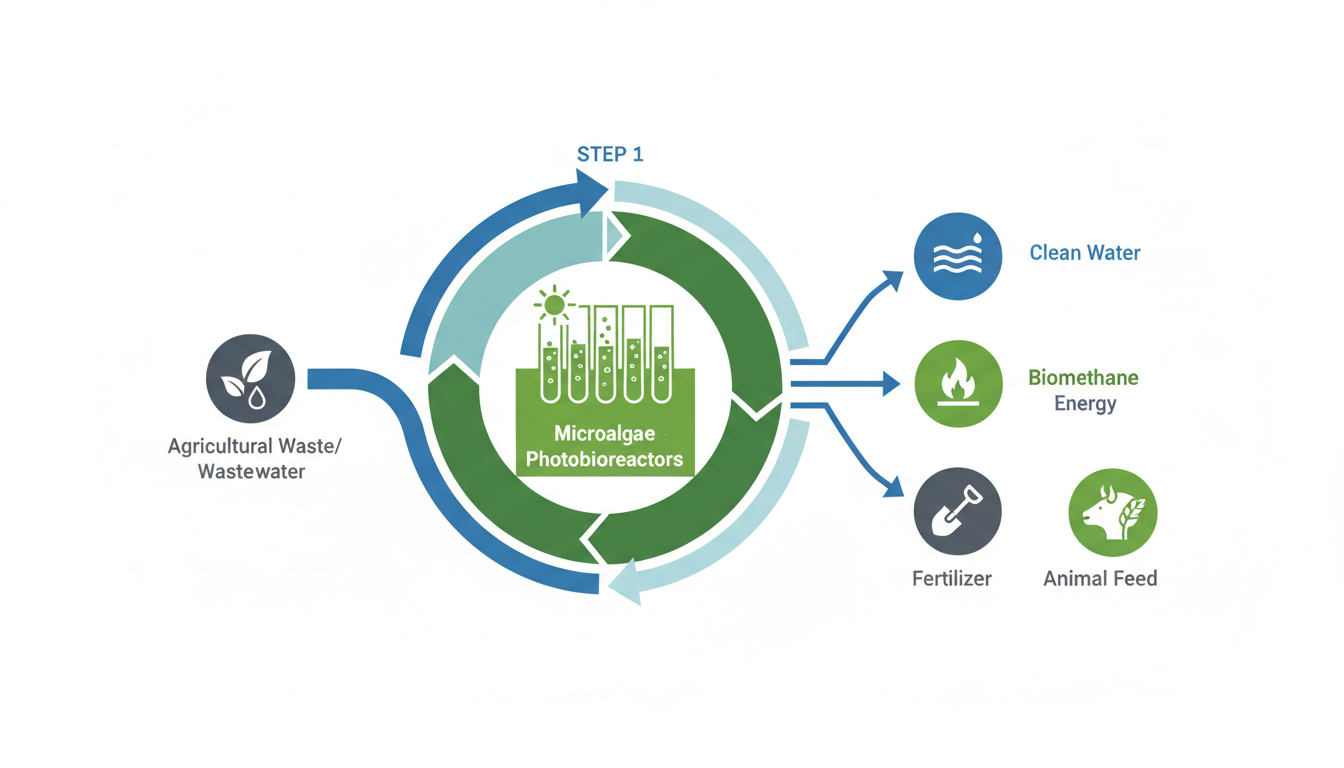
The 'Waste-to-Profit' Circular Loop
Microalgae can transform agricultural and municipal wastewater liabilities into valuable commercial assets. By integrating algae cultivation, businesses remove harmful nutrients while generating clean water, energy, and physical products like fertilizer and feed.
Regional Advantage: Saline Cultivation Model
Regional Australia's natural resources—sun, sea, and arid land—are the only inputs required for high-value production. This model avoids using scarce freshwater and fertile soil, making it ideal for remote economic development.